






















Now Reading: Google I/O 2026: Biggest AI and Android Updates
- 01
Google I/O 2026: Biggest AI and Android Updates

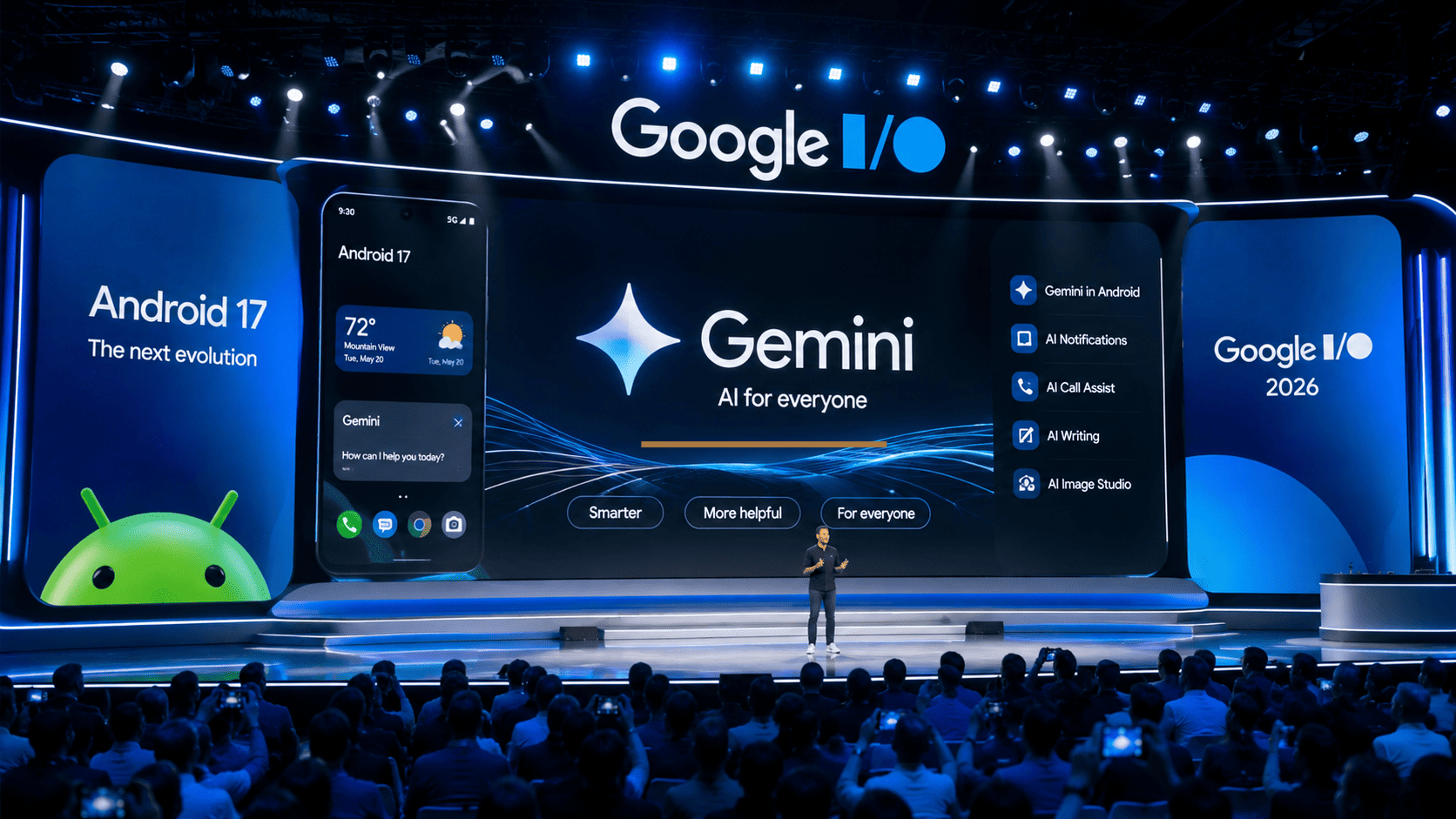
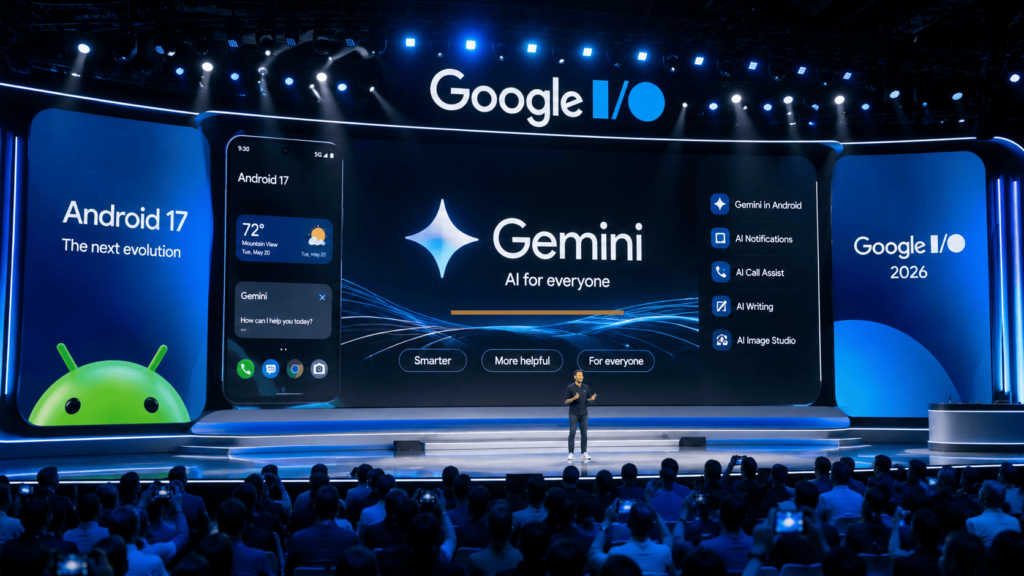
Google I/O 2026 has become the clearest signal yet of where Google is heading next: deeper AI, smarter Android experiences, and a more connected Google ecosystem. Google’s annual developer conference is taking place May 19-20 in Mountain View and online, with Google saying the event will showcase AI breakthroughs and product updates across Gemini, Android, Chrome, Cloud, and more.
For a US audience, this matters because Google I/O is no longer just a developer event. It is the launchpad for the features that will shape search, phones, productivity tools, and smart devices over the next year. If you use an Android phone, Google Search, Docs, Gmail, or Gemini, the announcements from this event can affect your daily routine almost immediately.
Table of Contents
What is Google I/O?
Google I/O is Google’s annual developer conference, where the company reveals major updates to its software, AI products, and platform strategy. In practice, it has become one of the most important technology events in the world because it often sets the tone for Google Search AI, Android updates, and Gemini AI features. The keynote typically includes product demos, live announcements, and a roadmap for developers and consumers alike.
Quick answer
Google I/O is Google’s flagship event for unveiling the next wave of products, tools, and AI features that will shape its ecosystem over the coming months.
Biggest announcements from Google I/O 2026
The biggest Google I/O announcements centered on AI becoming a much larger part of Google’s products and services. Coverage from the keynote highlights Gemini Omni, Gemini 3.5 Flash, stronger AI search capabilities, developer tooling through Antigravity, and broader AI integration across Google apps. Google also emphasized authenticity and verification with C2PA Content Credentials and SynthID support in Search and Chrome, showing that it is pairing AI expansion with trust features.
Biggest surprise announcements
- Gemini Omni, a new AI video creation tool that can generate and refine video from multiple input types.
- Gemini 3.5 Flash, launched with stronger speed and broad availability in the Gemini app and Search AI Mode.
- Antigravity, a developer platform for building AI agents with new privacy protections and a standalone desktop app.
- Docs Live, which brings conversational editing and content actions into Google Docs.
- Wider verification tools for AI-generated content in Gemini, Search, and Chrome.
Gemini AI updates
Gemini was the star of Google I/O 2026, with Google positioning it as the intelligence layer across search, productivity, video, and developer workflows. The new Gemini 3.5 Flash model is described as faster and broadly available in the Gemini app and Google Search AI Mode, which suggests Google is pushing Gemini deeper into everyday use. That is a big deal for users because it turns Gemini from a chatbot into a more embedded AI assistant inside Google products.
Google also introduced Gemini Omni, which aims to create and refine video from text, images, audio, and video inputs. That makes it especially relevant for digital creators, social teams, and marketers who need generative AI tools for fast content production. In short, Gemini is moving from “answering questions” to doing more of the actual work.
Android 17 features
Android 17 is expected to be a major talking point around Google I/O 2026, even though Google had already previewed some Android updates separately. Reporting suggests Android 17 focuses more on polish, stability, and performance, while adding floating app windows, known as Bubbles, for better multitasking on larger screens and foldables. Android 17 also appears to be gaining more agentic functionality, meaning it may do more tasks on the user’s behalf.
Google’s Android ecosystem is also moving toward a more intelligence-driven interface, with AI playing a larger role in how the operating system responds to context and user needs. That shift matters because Android is becoming less about navigation and more about prediction, assistance, and automation. For everyday users, this could mean faster workflows, smarter notifications, and smoother multitasking.
What it means for users
- Better multitasking on phones and foldables.
- More AI help inside the Android ecosystem.
- Potentially smoother performance and stronger security.
- A more personalized experience across devices
AI in Google Search
Google Search is becoming more conversational and more powerful through AI Mode and Gemini integration. The latest updates suggest Google wants users to ask complex questions and get richer, contextual answers directly in Search rather than jumping between multiple pages. That is especially important for the US market, where search behavior is changing fast and AI summaries are becoming a major part of user discovery.
Google also appears to be expanding verification tools in Search so users can identify whether images and media were created or modified with AI. This is a smart move because it gives Google a trust advantage at a time when synthetic media is becoming harder to spot. For publishers, this means the competition for visibility is shifting toward content that is highly original, useful, and authoritative.
New launches and tools
Google I/O 2026 highlights show that Google is not treating AI as a separate product line anymore; it is embedding it across the full stack. New tools like Antigravity are designed to help developers build agents and apps faster, while Google Workspace gains more conversational and AI-assisted workflows. There are also broader signals that Google wants Chrome, Search, Docs, and Android to feel more unified under Gemini.
Notable product areas
| Area | What changed | Why it matters |
|---|---|---|
| Gemini | Faster model updates and video generation | Stronger consumer AI and creator tools |
| Search | More AI Mode integration | Better answers and search efficiency |
| Workspace | Conversational Docs features | Faster productivity workflows |
| Developer tools | Antigravity and related APIs | Easier AI app and agent development |
| Trust and safety | C2PA and SynthID verification | Better authenticity checks |
Workspace AI features
Google Workspace is becoming a more active AI productivity suite rather than a passive set of apps. At Google I/O, Google highlighted features that let users interact with Docs through conversational instructions and pull information from Gmail, documents, and the web. That makes Workspace more useful for teams, creators, and businesses that want AI tools by Google built directly into everyday work.
For users, this means less manual formatting, fewer app switches, and faster drafting. For businesses, it could improve efficiency while also raising new questions about review workflows and content accuracy. The best way to think about it is simple: Google wants Workspace to feel like a collaborator, not just software.
Developer tools and APIs
Google I/O is still a developer conference at its core, and this year’s focus on Antigravity reinforces that. Google is clearly trying to make it easier to build AI products, especially agent-based systems and generative AI experiences. That should appeal to developers working in cloud computing, productivity tools, and smart device ecosystems.
For technical teams, the message is clear: Google wants developers to build on Gemini, not around it. That is important because the next generation of apps may rely on AI orchestration, multimodal inputs, and integrated search or cloud services. In other words, the developer keynote is becoming just as strategically important as the consumer announcements.
Privacy and security
Google also used I/O to highlight content authenticity and verification features, including C2PA Content Credentials and SynthID support. These tools are important because they help identify whether media is original or AI-altered, which is increasingly relevant across social platforms, publishers, and search results. This is one of the most important trust stories of the event because it shows Google understands the downside of rapid AI adoption.
Privacy protections for developer tools like Antigravity also suggest Google is trying to make AI development safer by default. That matters for enterprise adoption, where data handling and security are often the deciding factors. Google’s broader strategy appears to be: move fast on AI, but make verification and trust part of the product story.
Future of AI
Google’s direction at I/O suggests a future where AI is not a standalone app but an operating layer across devices, search, creative tools, and work software. The clearest trend is agentic AI, where systems can take action, not just provide suggestions. That is why Google AI updates at I/O feel so significant: they are laying the groundwork for a more automated ecosystem.
The company also seems committed to multimodal AI, which can work across text, images, audio, and video. For users, that means faster content creation, smarter search, and more natural interaction with devices. For developers, it means new opportunities to build products that are more context-aware and less app-centric.
Everyday impact
For everyday users, Google I/O 2026 is not abstract at all. It could change how you search, how you write emails, how you create videos, and how your Android phone helps you get things done. That is why Google I/O often creates a surge in interest from consumers, developers, and creators at the same time.
Pros and cons
Pros
- More powerful AI tools across Google products.
- Better Android multitasking and ecosystem integration.
- Stronger productivity features in Workspace.
- More trustworthy media verification tools.
Cons
- More AI features can feel overwhelming for some users.
- Deeper AI integration may increase privacy concerns.
- Some launches may roll out gradually rather than instantly.
Expert predictions
The most likely next phase after Google I/O is even deeper Gemini integration across Chrome, Search, Android, and Workspace. I also expect Google to keep leaning into creator-focused AI tools, especially video generation and assistant-style workflows, because those are high-engagement features with clear consumer demand. The strongest strategic bet is that Google will continue turning Gemini into the center of the Google ecosystem rather than a separate brand layer.
A second prediction is that trust features will become a bigger part of Google’s marketing story, not just a technical note. As AI content grows, Google benefits from leading the conversation on authenticity and verification. That positioning may prove just as valuable as the launches themselves.
Key takeaways
- Google I/O 2026 is heavily focused on AI, Android, Search, and productivity.
- Gemini is now the core of Google’s consumer and developer strategy.
- Android 17 is expected to improve multitasking, intelligence, and ecosystem integration.
- Google Search is becoming more conversational and AI-driven.
- Verification and trust tools are becoming part of the AI story.
FAQs
Q1: What is Google I/O 2026?
A1: Google I/O 2026 is Google’s annual developer conference focused on AI, Android, Search, Cloud, and other product updates.
Q2: What are the biggest Google I/O 2026 announcements?
A2: Key announcements include Gemini Omni, Gemini 3.5 Flash, Antigravity, Docs Live, and content verification updates.
Q3: What is Gemini Omni?
A3: Gemini Omni is Google’s new AI video creation tool that can turn text, images, audio, and video inputs into editable video outputs.
Q4: What new features are coming to Android 17?
A4: Android 17 is expected to improve multitasking, stability, performance, and AI-driven experiences.
Q5: How does Google Search use AI now?
A5: Google Search is integrating Gemini-powered AI Mode to provide more conversational and context-aware answers.
Previous Post
Next Post
















Advertisement