


















Now Reading: Tulsi Gabbard resignation jolts Trump, Iran debate
- 01
Tulsi Gabbard resignation jolts Trump, Iran debate

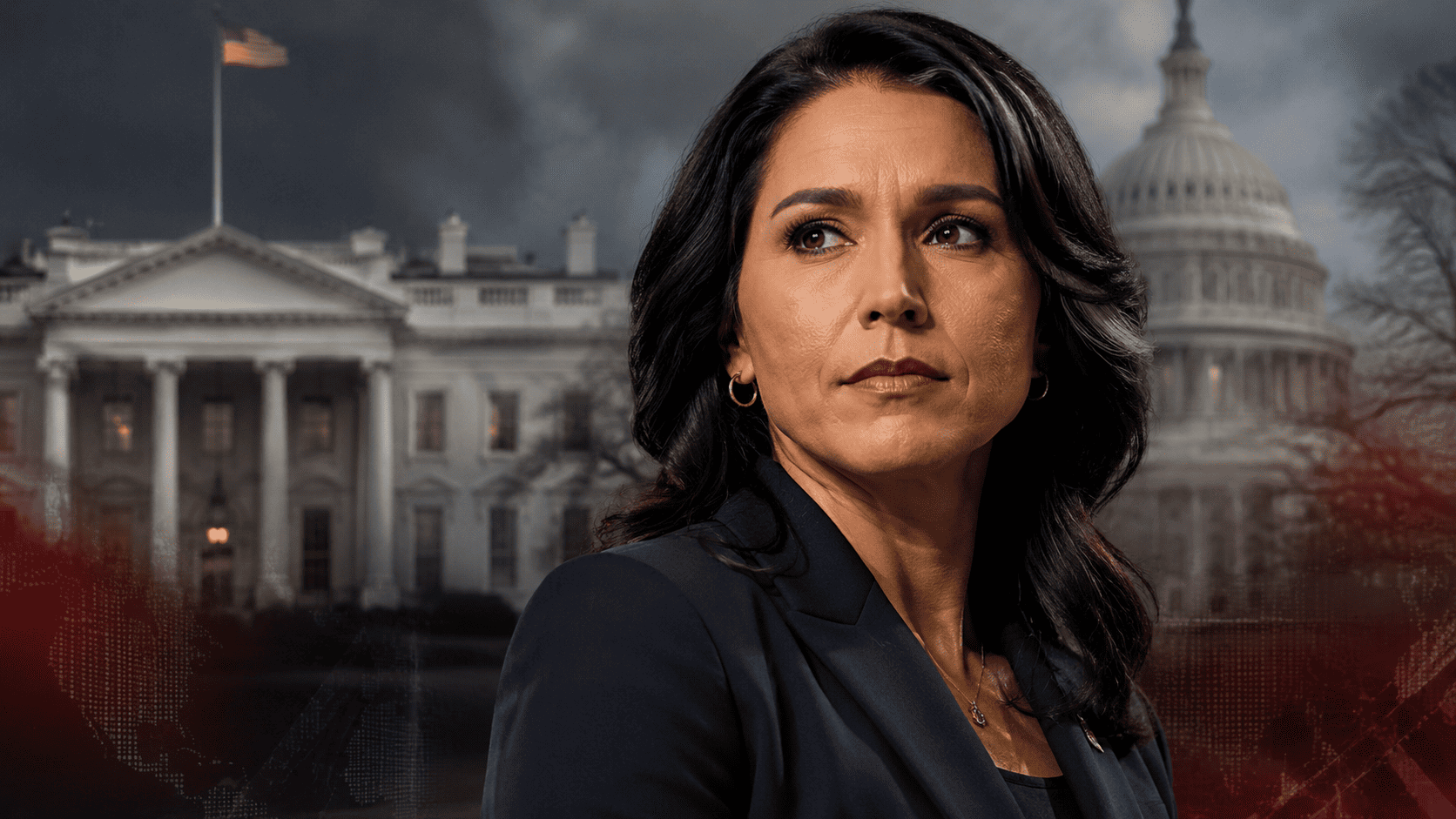
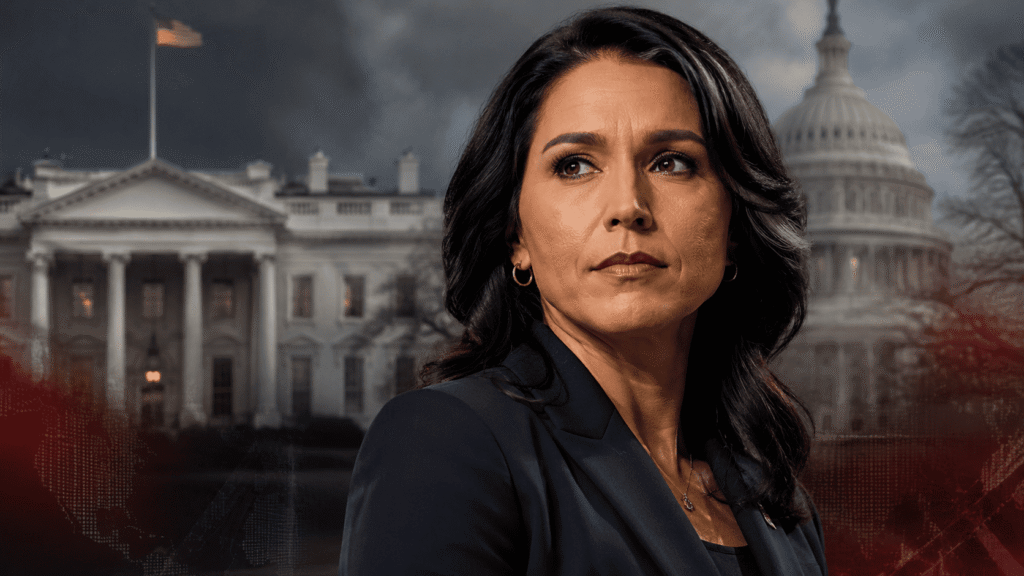
Tulsi Gabbard is back at the center of American and Indian political conversation after reports that she has resigned as Donald Trump’s Director of National Intelligence. The move has triggered immediate questions about Iran, the future of U.S. intelligence under Trump, and what her departure means for India-U.S. relations.
Table of Contents
Why Tulsi Gabbard is trending
Gabbard’s resignation is trending because it lands at a volatile moment for the Trump administration, with intelligence policy, Middle East conflict, and internal political loyalty all colliding at once. It also comes after months of scrutiny over her role in major national-security decisions, especially those tied to Iran and domestic intelligence operations.
For readers in the United States, this is another high-stakes Trump administration story about power, loyalty, and foreign policy. For readers in India, it is also about a rare figure in Washington whose Hindu identity, public outreach to Indian leaders, and visible support for stronger India-U.S. ties have made her especially recognizable.
What happened to Tulsi Gabbard?
Reports say Tulsi Gabbard has stepped down from her role as Director of National Intelligence, with outlets citing personal reasons linked to her husband’s cancer diagnosis. The resignation was confirmed after weeks of speculation that she might leave the administration before the political calendar intensifies around the midterms.
That timing matters. Gabbard’s exit is not just a personnel change; it is also a signal about how much strain has built up around her portfolio, especially after clashes over Iran, intelligence assessments, and her evolving place inside Trump’s orbit.
Her rise to power
Tulsi Gabbard’s political career has always been unusual. She first rose to prominence as a Democrat, served in Congress from Hawaii, and built a public brand around anti-interventionism, military service, and independence from party lines. Over time, she became one of the most visible political crossovers in modern U.S. politics, eventually aligning with Trump and entering his second administration.
Her appointment as Director of National Intelligence was controversial from the start. The DNI role oversees the U.S. intelligence community, including 18 agencies and a budget that runs into tens of billions of dollars, so any nominee with limited intelligence experience was always going to face intense scrutiny.
Why critics never relaxed
Critics questioned whether Gabbard was the right fit for a post that demands trust, discretion, and analytical discipline. Her past comments on Russia, Syria, and foreign conflicts continued to shadow her, and opponents argued that her political instincts sometimes seemed stronger than her intelligence credentials.
Supporters, meanwhile, saw her as a disruptor who would challenge entrenched Washington thinking. That tension has followed her from Congress into the Trump era, and it explains why almost every move she makes turns into a national debate.
Trump, loyalty, and pressure
Tulsi Gabbard’s relationship with Trump has been defined by a mix of trust and friction. In 2025, reporting suggested that Trump was already frustrated by some of her public comments on nuclear risk and Iran, even as she remained inside his inner circle. By early 2026, reports of dissatisfaction had become more explicit, including stories that Trump wanted her to leave before the election cycle sharpened.
That dynamic is important because Gabbard was never just another cabinet member. As DNI, she sat close to the center of U.S. foreign-policy decision-making, where intelligence assessments can influence war, diplomacy, and presidential messaging in real time.
“The intelligence community assesses that the Iranian regime appears to be intact but has been largely degraded,” Gabbard said during a March hearing, underscoring how central Iran had become to her public role.
The Iran controversy
The Iran issue is the biggest reason Gabbard’s tenure became so politically charged. She faced criticism after saying the intelligence community did not assess that Iran was actively building a nuclear weapon, a view that clashed with Trump’s harder line. Later, after U.S. and Israeli strikes against Iranian nuclear facilities, she testified that Iran’s capabilities had been severely damaged, but the political damage around her credibility was already done.
Her position also became linked to wider debate inside the Trump administration about whether the U.S. was drifting toward a broader conflict in the Middle East. The resignation of senior officials over the Iran war, and the public debate surrounding those resignations, turned Gabbard into a focal point for arguments about escalation, restraint, and intelligence honesty.
Why this matters in Washington
When a DNI becomes part of the debate rather than the referee, confidence in the intelligence community can weaken. That is especially sensitive during a period when presidents need clean, trusted intelligence to justify military decisions and manage allies.
For Trump, Gabbard’s anti-war instincts may have been useful politically, but they also created tension once the administration moved toward a more aggressive Iran posture. In Washington, that kind of mismatch rarely stays quiet for long.
Intelligence questions in focus
Gabbard’s record in office has also been shaped by controversies unrelated to Iran. Reporting in 2026 described scrutiny over her handling of a classified intelligence intercept involving foreign operatives and a person linked to Trump. There were also earlier controversies over personnel decisions, including the firing of intelligence officials and criticism that such moves politicized the intelligence apparatus.
That combination of events matters because the DNI is expected to sit above partisan combat, not inside it. Every time a national-intelligence chief becomes a political character, the public conversation shifts from security to suspicion.
India’s interest in Tulsi Gabbard
In India, Tulsi Gabbard draws attention for more than U.S. cabinet politics. She has long been known for her Hindu faith and for positions that have made her stand out in American public life. She has also repeatedly signaled that India-U.S. ties deserve stronger counter-terrorism and security cooperation.
Her 2025 visit to India reinforced that connection. During meetings with Prime Minister Narendra Modi and other senior officials, she discussed intelligence cooperation, defense, trade, and strategic alignment. The symbolic exchange of tulsi beads and Gangajal during the Modi meeting also made the visit especially resonant for Indian audiences.
Why Indian readers care
For Indian readers, Gabbard is not just an American politician. She is one of the few U.S. national figures who openly speaks in culturally familiar terms, embraces Hindu identity publicly, and has expressed support for deeper India-U.S. collaboration on security and technology.
That is why any major change in her political status matters beyond Washington. If she leaves the intelligence post, Indian analysts will watch to see whether the next DNI keeps the same warmth toward India or recalibrates priorities toward a more traditional national-security agenda.
U.S.-India ties after her exit
Gabbard’s resignation could affect how India reads the mood in Washington, even if official policy stays steady. She has been a visible bridge figure, especially on counter-terrorism and defense cooperation. Her absence may reduce the personal symbolism that has helped give India-U.S. ties a softer human face in some circles.
Still, the broader strategic relationship is unlikely to hinge on one official alone. The real test will be whether the Trump administration preserves the intelligence-sharing and defense coordination that India values, especially amid regional instability and great-power competition.
Social media reaction
The resignation sparked a fast wave of reactions online, with Trump supporters, Democrats, and foreign-policy observers all reading it differently. Some framed it as a personal decision driven by family circumstances, while others saw it as the end of a politically fraught experiment inside the intelligence community.
A familiar pattern has also returned: every Tulsi Gabbard controversy becomes both a U.S. political story and an identity story. On social media, that means she is discussed simultaneously as a Trump loyalist, a former anti-war Democrat, a Hindu public figure, and a national-security official under pressure.
What comes next for Gabbard?
The biggest open question is whether Tulsi Gabbard will re-enter politics in some new form or remain on the sidelines for a while. Her resignation keeps alive speculation about a future run, a media role, or an outside-policy platform focused on anti-war politics and foreign affairs.
For Trump, the immediate question is simpler: who replaces her, and how quickly can he restore confidence inside the intelligence chain? In an administration already defined by rapid turnover and high-stakes foreign crises, the next DNI will inherit a politically charged job from day one.
Conclusion
Tulsi Gabbard’s departure suggests three things. First, the Trump administration is still highly sensitive to internal dissent on Iran and foreign intervention. Second, intelligence leadership is becoming more openly political than many observers expected. Third, Gabbard has remained relevant precisely because she sits at the crossroads of U.S. power, anti-war politics, and India-facing symbolism.
FAQs
What happened to Tulsi Gabbard?
Tulsi Gabbard reportedly resigned as Director of National Intelligence, with reports citing family and personal reasons related to her husband’s health.
Why is Tulsi Gabbard trending now?
She is trending because her resignation comes amid major Trump administration tensions over Iran, intelligence policy, and the future of U.S. national-security leadership.
What is Tulsi Gabbard’s role in Trump administration news?
As Director of National Intelligence, she oversaw the U.S. intelligence community and became a key figure in debates over Iran, domestic intelligence, and Trump’s foreign-policy direction.
What is Tulsi Gabbard’s connection to India?
Gabbard has publicly highlighted India-U.S. cooperation, met Prime Minister Narendra Modi, and is widely recognized in India for her Hindu faith and diplomatic symbolism.
Why is Tulsi Gabbard controversial?
She has faced controversy over her shifting party alignment, foreign-policy views, intelligence decisions, and her handling of Iran-related assessments and security matters.
Related Posts
Previous Post
Next Post














Advertisement